Anyone who has spent time running a dealership already knows the key problem. Not the metaphorical kind — the literal kind. Physical keys to vehicles, offices, service bays, storage areas, and lockers. Dozens or hundreds of them, moving between people all day long, and nobody can identify exactly where any given key is at any given moment.
Most dealerships manage this with some combination of pegboards, lockboxes, and sign-out sheets. It works — until it does not. A customer is waiting for a test drive and the key is missing. A vehicle needs to move for service and nobody signed the key out. A vehicle is taken from the premises over the weekend and no one can say who had access.
Electronic key management is not new technology. It has been used in dealerships, fleet operations, law enforcement, and government facilities for over two decades. But for many dealerships — particularly in markets where the concept has not yet reached critical mass — it remains unfamiliar. This article explains what it is, how it works in practice, and what it changes about daily operations.
What it actually is
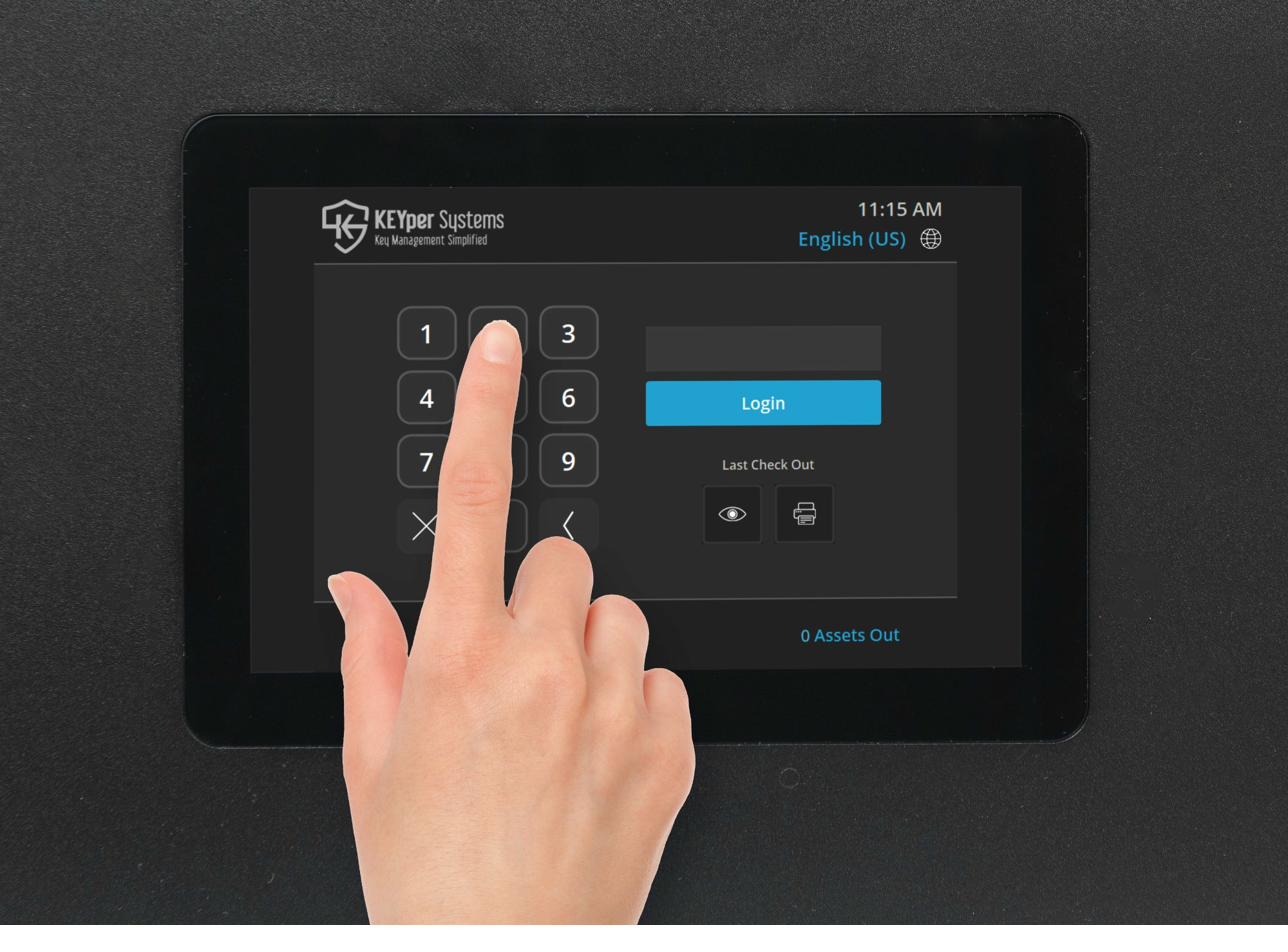
An electronic key management system is a secured cabinet that stores keys on individually locked pegs or slots. Each key position is electronically controlled. To remove a key, a user must authenticate — typically with a PIN code, an access card, a fingerprint, or a combination of these — and the system records who took which key and when. When the key is returned, the system logs that too.
The cabinet connects to the network (wired or wireless) and syncs transaction data to a cloud-based dashboard. Managers can see in real time which keys are out, who has them, and how long they have been gone. Automated alerts can flag overdue keys, unauthorised access attempts, or keys that have not moved in an unusual amount of time.
That is the core of it. Everything else — reporting, DMS integration, multi-location management, curfew enforcement — builds on that foundation of knowing exactly where every key is.
What changes in daily operations
The most immediate change is accountability. When every key transaction is logged with a name, a timestamp, and a method of authentication, the ambiguity disappears. There is no more "I thought someone else had it." There is no more guessing. The system knows, and anyone with dashboard access can check.
For sales teams, this means test drive keys are available when they need them, and if a key is missing, the system shows who had it last. For service departments, it means technicians check keys out when they start a job and return them when they are done, which reduces the chaos of multiple techs working on multiple vehicles in a shared bay. For management, it means there is a verifiable record of key activity that can be reviewed daily, weekly, or in response to an incident.
The operational friction that disappears is hard to quantify until it happens firsthand. Dealerships that have made the switch consistently report that the time spent looking for keys, the arguments about who had what, and the low-level anxiety about key security simply go away. That does not mean problems never happen — but when they do, there is data instead of finger-pointing.
What it does not do
It is worth being clear about what electronic key management does not do. It does not eliminate all security risk. A system can be bypassed if credentials are shared, and it cannot prevent every possible scenario. It does not replace good operational discipline — it supports and reinforces it. And it does not manage itself. Someone at the dealership needs to own the system: managing user permissions, reviewing alerts, and keeping the key inventory current as vehicles come and go.
It is a tool, not a solution in a vacuum. The value it delivers depends heavily on how well it is integrated into the dealership's daily routines and how seriously the team takes the accountability it creates.
The cost question
The most common objection is cost. Electronic key cabinets are not cheap, and there is typically an annual licensing fee for cloud services, connectivity, and software updates on top of the hardware investment. For a dealership that has been using a pegboard for decades, the idea of spending thousands on a key cabinet can feel excessive.
The counter-argument is straightforward: how much do lost keys actually cost? Replacement keys for modern vehicles — particularly those with transponder chips, proximity fobs, or manufacturer-specific programming — routinely cost hundreds per key. A dealership losing even a few keys per month is spending thousands annually on replacements alone. Add the cost of staff time spent searching for keys, delayed customer handovers, missed service appointments, and the occasional vehicle that leaves the premises without authorisation, and the payback period tends to be short.
That said, every dealership is different. The right way to evaluate the investment is to look at the actual numbers: how many keys go missing, how much time the team spends on key-related friction, and what the insurer requires for key storage compliance. The answer will be different for a five-person independent shop than for a multi-franchise dealer group.
Who this is relevant for
Electronic key management makes the most sense for dealerships that hold inventory — new or used — and have multiple people who need access to vehicle keys throughout the day. The more keys in circulation and the more people handling them, the more value a system like this delivers.
For very small operations with a handful of vehicles and one or two people, a lockbox and a sign-out sheet may genuinely be sufficient. There is no point over-engineering a problem that does not exist at scale. But once the operation is managing 50 or more keys across a team, the manual approach starts breaking down in ways that are hard to see from the inside — until you have the data to show what was actually happening.
Evaluation and next steps
If this is a new concept for the dealership, the best first step is simply to understand what is available and what it would look like in the operation. A conversation with a distributor and a product demonstration can help determine whether the problem is significant enough to warrant the investment. This is a significant operational change and it deserves proper evaluation — there is no reason to rush the decision.
The technology is proven, the benefits are well documented, and the dealerships that adopt it tend to wonder why they waited. But it is the operation, the budget, and the decision to make.