If you have been through a commercial insurance renewal in the last year or two, you may have noticed the questions getting more specific. Insurers have always cared about dealership security — cameras, fencing, lighting, alarms. But increasingly, the conversation is turning to something more granular: how do you manage the keys?
This shift is not accidental. It reflects a broader tightening in commercial auto underwriting, driven by rising claim costs, increasingly sophisticated theft methods, and a growing body of loss data that points directly to key control as a critical variable in dealership security outcomes.
What insurers are asking
The exact questions vary by carrier and market, but the themes are consistent. Based on industry trends and underwriting practices observed across the automotive insurance sector, the areas of focus typically include the following.
Where are vehicle keys stored after business hours? Are they in a locked, secured location or left accessible in the building? What controls are in place to limit who can access keys? Is it a physical lock with a single key that multiple people share, or is there individual-level authentication? Is there a documented log of key access? Can the dealership produce a record showing who took which key and when — not just for today, but for the last week, the last month, or the date of a specific incident? How are keys handled during business hours? Are they on an open pegboard that anyone in the building can access, or is there a controlled check-out process? What happens when a key goes missing? Is there a defined protocol, or does the dealership improvise?
These are not hypothetical questions. They reflect the kind of due diligence that underwriters are increasingly applying when assessing risk and setting premiums for dealership inventory coverage.
Why this is happening now
Several factors are converging. The value of vehicles on dealer lots has increased significantly in recent years. Average new vehicle transaction prices have risen substantially, which means the inventory sitting on any given lot represents a larger aggregate exposure than it did a decade ago. When a vehicle is stolen, the claim is bigger.
At the same time, theft techniques have become more sophisticated. Relay attacks on keyless entry systems, OBD port exploitation, and organised theft rings targeting specific models are all well documented. Many of these methods depend on physical access to the vehicle key — or at least to the key's signal. A dealership that leaves keys accessible in an unlocked office after hours is essentially providing the critical input that modern vehicle theft requires.
Insurers have also become more data-driven in their risk assessment. The correlation between weak key controls and higher loss ratios is now well established in underwriting models. A dealership with documented key management practices represents a meaningfully different risk profile than one without — and premiums are beginning to reflect that difference.
What auditors look for
When an insurer sends a loss control specialist to evaluate a dealership — either as part of the underwriting process or after an incident — key management is now a standard part of the assessment. The auditor typically wants to see three things.
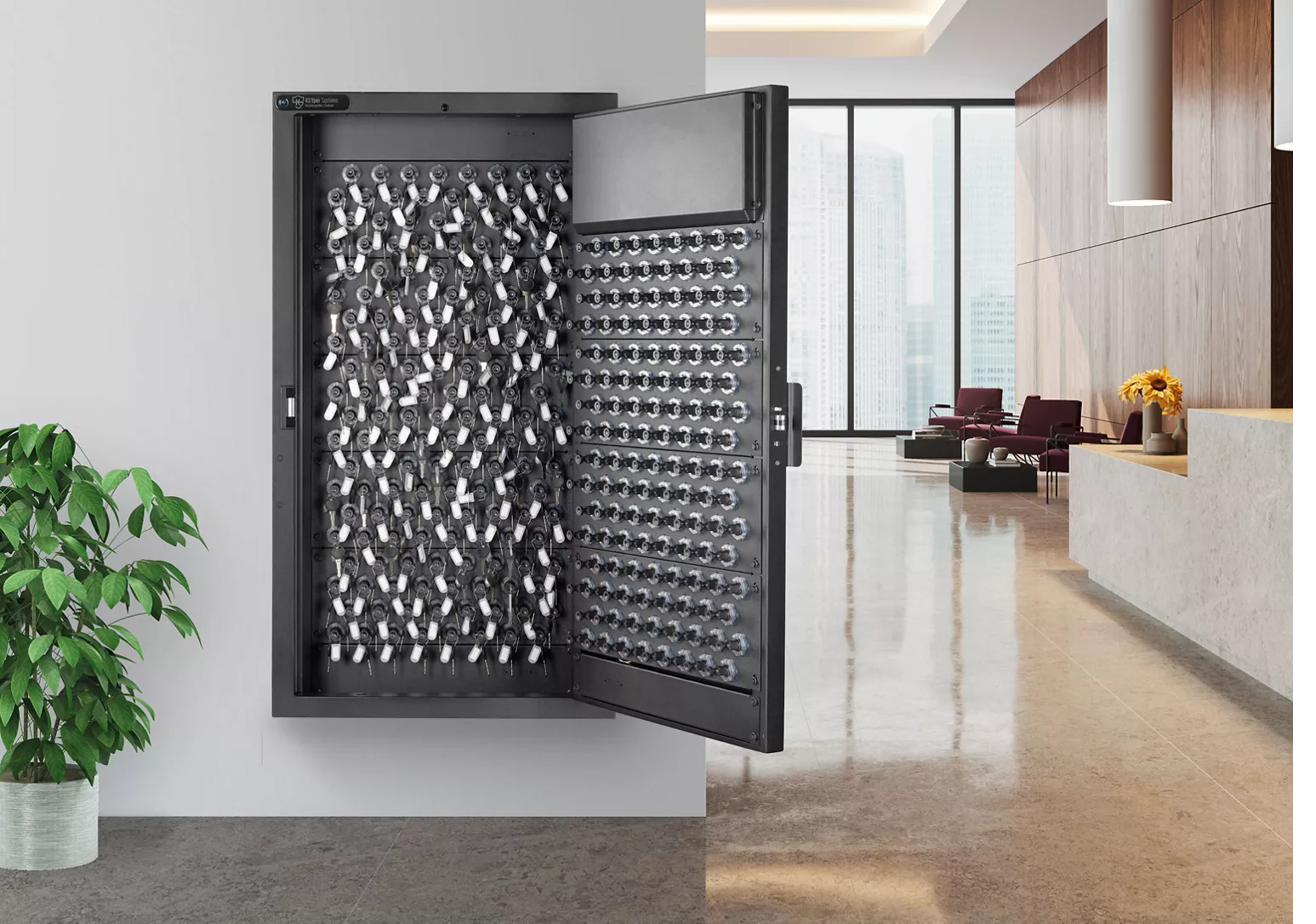
First, physical security of key storage. This means a locked enclosure — whether a cabinet, a safe, or an electronic key management system — that is not accessible to unauthorised individuals. An open pegboard in a shared office does not satisfy this requirement, regardless of whether the office has a door that can be locked.
Second, access controls. The auditor wants to know how the dealership determines who can take which keys, and whether that access is logged. Individual-level authentication (PIN, card, biometric) is the strongest answer. A shared combination that half the building knows is the weakest.
Third, an audit trail. This is the one that matters most after an incident. If a vehicle is stolen and the insurer asks for a record of who last accessed that key, a printed log from an electronic system is a very different answer than "we think it was probably someone in service, but we are not sure." The strength of the audit trail directly affects the insurer's willingness to pay the claim promptly and without dispute.
The premium connection
It is difficult to generalise about premium impacts because every carrier, every market, and every dealership's risk profile is different. But the direction is clear: dealerships that can demonstrate strong key controls are in a better position at renewal. This may manifest as a more favourable premium, a lower deductible, fewer policy exclusions, or simply a smoother renewal process with fewer follow-up questions.
Conversely, dealerships that cannot demonstrate credible key management practices may face tighter terms, higher deductibles, or — in the worst case — difficulty finding coverage at all. The commercial auto liability market has been under pressure for several years, with carriers paying out more in claims than they collect in premiums. In that environment, underwriters are looking for reasons to differentiate risk, and key controls are an easy variable to assess.
What this means for the dealership
The practical takeaway is straightforward: before the next insurance renewal, review key management practices and be prepared to answer specific questions about how keys are stored, who has access, and whether you have a documented audit trail. If the answers are strong, make sure your broker communicates that to the carrier — it is a differentiator that can work in your favour. If the answers are weak, you have time to address them before the renewal conversation.
This does not necessarily mean purchasing an electronic key management system. Meaningful improvements can be made with better physical controls, a consistent sign-out process, and a log that is actually maintained. But for dealerships with higher key volumes or higher-value inventory, an electronic system provides the strongest possible answer to every question an insurer is likely to ask — because the audit trail is automatic, the access controls are enforced, and the data is available on demand.
Whatever approach you take, the important thing is to have an answer ready. The days of vague responses to insurer questions about key security are ending. The dealerships that get ahead of this — voluntarily, before the insurer forces the issue — will be in the strongest position.